 Minecraft
  Corrida do Templo


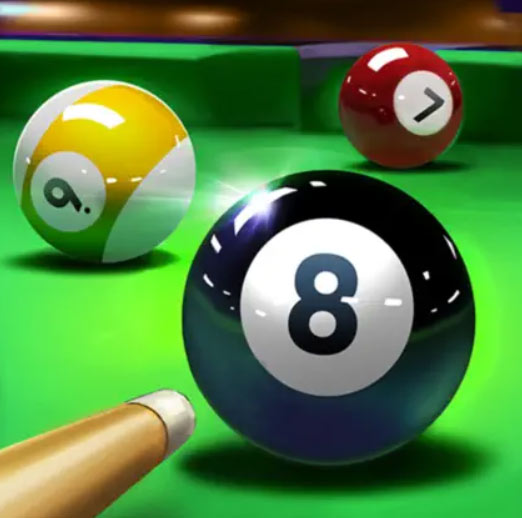
8 Pool Clash
All trademarks belong to their respective owners.
Author

8 Pool Clash is a sleek, competitive billiards simulator that brings the high-stakes atmosphere of a professional pool hall to your screen. Whether you're playing against a sophisticated AI or challenging players worldwide, the game focuses on precision, geometry, and tactical thinking. If you enjoy the methodical pace of sports simulations where a single millimeter of adjustment makes the difference between a spectacular "bank shot" and a total scratch this title offers a polished, physics-based experience.
Gameplay Overview
The core loop of 8 Pool Clash mirrors the professional "8-ball" format with intuitive digital enhancements.
- Precision Aiming: You use a visual guide-line to project the path of the cue ball and the target ball. Mastering how to "read" these lines is the first step toward clearing the table.
- Power and Spin: A vertical slider controls the force of your strike. Critically, you can also adjust the "hit point" on the cue ball to apply top-spin, back-spin (draw), or side-spin (English), allowing you to position the cue ball perfectly for your next shot.
- Cue Progression: You start with a basic wooden cue, but as you win matches and earn coins, you can unlock "Legendary Cues" with improved stats in power, aim-line length, and spin control.
- Tournament Structure: The game often features a tiered system where you buy into "rooms" (like London, Sydney, or Las Vegas) with increasing stakes. The higher the entry fee, the larger the prize pool.
A Brand & Design Perspective
For a student of Brand Management and Visual Identity, 8 Pool Clash is an excellent study in gamified monetization and UI/UX design:
- Visual Hierarchy: The interface uses a "premium" dark aesthetic heavy on deep greens, golds, and blues to mimic the luxury of a high-end billiard club.
- The "Unboxing" Hook: The game utilizes "Cue Chests" with flashy animations and sound effects to create a dopamine loop, a classic tactic in digital brand retention.
- Social Proof: By displaying player flags, levels, and win-streaks, the game builds a competitive identity for the user, encouraging them to invest more time (and potentially money) to maintain their status in the global rankings.
Pros & Cons
Pros
- Highly accurate physics engine that rewards genuine skill and geometric understanding.
- Very short wait times for matches, making it perfect for quick breaks.
- Satisfying tactile feedback, from the "clack" of the balls to the vibration of a successful pot.
Cons
- High-tier cues can provide a significant advantage, which can sometimes make the game feel "pay-to-win."
- The "aiming lines" can make the game feel a bit too easy for billiards purists who prefer a "no-guideline" mode.
- Advertisements for premium currency and special offers can be quite frequent.
Tips for the Table
- Plan Two Steps Ahead: Don't just focus on the ball you're hitting now. Look at where the cue ball will land after the hit. Use a little back-spin to keep it from rolling too far so you have an easy angle on your next target.
- Manage Your Bankroll: It’s tempting to jump into the high-stakes Las Vegas room as soon as you have the coins. Don't! Always keep enough "reserve" coins so that one unlucky loss doesn't send you back to the beginner tables.
- Watch the Timer: Unlike real-life pool, you are on a strict clock. If you spend too much time calculating a complex bank shot, you’ll forfeit your turn. Sometimes a simple, safe shot is better than a perfect one that takes too long.
Final Verdict
8 Pool Clash is a masterclass in accessible sports gaming. It strips away the physical difficulty of handling a real cue but keeps all the mental strategy and tension of the sport. It’s a clean, professional-looking app that understands its "premium" brand identity perfectly. Whether you're interested in the physics of the game or the marketing strategy behind its success, it’s a highly addictive experience.
Since you've been looking at several "clones" or variations of popular games today, do you think the visual polish and UI design of a game like this is more important for retaining players than the actual gameplay mechanics themselves?