

 Minecraft
  Temple Run


DESCRIPTION
Autor

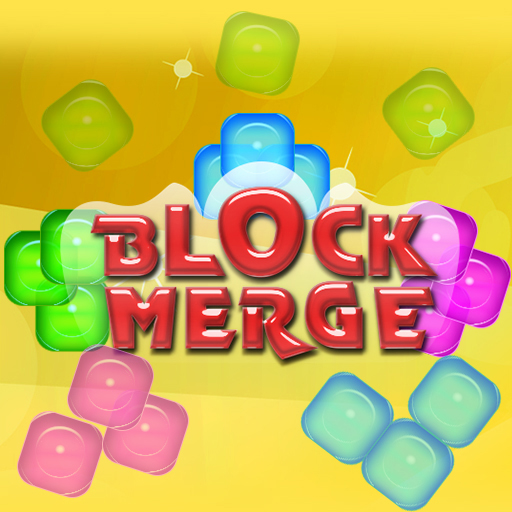
Blocks Merge represents a massive sub-genre of hyper-casual puzzle games that brilliantly combines the falling-block spatial management of Tetris with the exponential math progression of 2048. Whether you are dropping blocks from the sky, shooting them from the bottom of the screen, or sliding them across a grid, the objective remains the same: combine identical numbers to create higher numbers before you run out of space.
Gameplay Overview
The core loop is heavily focused on spatial organization, basic arithmetic, and setting up cascading chain reactions.
The Number Match
The game typically starts with low-numbered blocks (like 2, 4, or 8). When you place two blocks with the exact same number next to each other (or drop one on top of the other), they merge into a single block with double the value. Two 2s become a 4; two 4s become an 8, and so on.
Grid Management
Just like classic arcade puzzlers, your play area is strictly limited. If you fail to merge blocks fast enough, they will begin to stack up. If your tower of blocks reaches the designated "game over" line at the top or bottom of the screen, your run ends.
Exponential Escalation
As you play, the math gets higher and the margin for error gets smaller. Creating a 2048 or 4096 block requires merging dozens of smaller blocks in a specific, organized sequence. The game constantly tests your ability to keep your board clean while dealing with randomly generated incoming numbers.
What Makes it Unique?
Blocks Merge turns simple multiplication into a highly addictive visual puzzle, offering a slightly more dynamic experience than a standard sliding grid puzzle.
The "Combo Cascade" Payoff
The most satisfying mechanic in the game is setting up a chain reaction. If you organize your board correctly, dropping a single "2" block can trigger a merge into a 4, which instantly merges with a neighboring 4 to make an 8, which then merges into a 16. Watching a massive stack of blocks condense into a single high-value cube in less than a second is incredibly rewarding.
Math as a Fidget Toy
Despite dealing with numbers, it doesn't feel like a math test. It feels like a tactile digital fidget toy. The visual feedback of the blocks squishing together, accompanied by ascending musical chimes for combo merges, makes the simple act of addition feel highly engaging.
Pros & Cons
Pros
- Perfectly Paced: Most variations of this game do not have a ticking timer, allowing you to play at your own speed and carefully plan your drops.
- Highly Addictive: The "number-go-up" mechanic triggers a strong dopamine loop, making it very hard to put down.
- Great Brain Training: It requires genuine forward-thinking and spatial planning to keep your board organized.
Cons
- RNG Frustration: Because the incoming blocks are randomly generated, you can sometimes get a string of terrible numbers that ruin your perfectly organized board through no fault of your own.
- Repetitive Loop: Once you understand the core strategy, the gameplay never really changes—the numbers just change color.
- Ad-Heavy: As a staple of the hyper-casual mobile market, free versions are usually packed with banner ads and forced video interruptions.
Tips for New Players
1. Build in a Corner
Never leave your highest-numbered block sitting in the middle of the board. Pick a corner (e.g., bottom-left) and build your highest numbers there. Keep your smaller numbers flowing toward that corner so they naturally merge upward into your largest block.
2. Don't Block Your Combos
Be very careful about dropping a low number (like a 2) on top of a high number (like a 64). If you bury a high-value block under a pile of small numbers, it becomes "dead space" that you cannot use until you manage to clear the garbage off the top of it.
3. Plan One Step Ahead
Look at the "Next Block" indicator if the game provides one. Do not just blindly drop your current block into the first available space. Place it where it will perfectly set up a merge for the next piece coming down the pipeline.
Final Verdict
Blocks Merge is the quintessential "easy to learn, hard to master" digital puzzle. It strips away complex storylines and characters in favor of pure, methodical number-crunching and spatial logic. If you enjoy the satisfying feeling of organizing a messy space and watching numbers grow exponentially, it is a fantastic, stress-relieving game to keep on hand.






.png)






.png)


