 Minecraft
  Temple Run


Ping Pong Table Tennis
All trademarks belong to their respective owners.
Author

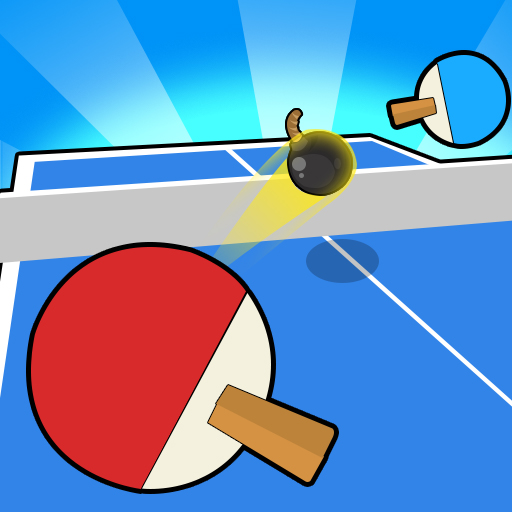
Ping Pong Table Tennis is a high-speed, precision-focused sports simulator that translates the intense physics of the Olympic table game into a digital format. Unlike complex sports sims that require memorizing button combos, this game relies almost entirely on tactile intuition and reaction time. It’s a masterclass in "minimalist competitive design," where the battle is between your focus and the laws of physics. Whether you’re playing a quick 11-point match during a study break or climbing the ranks of a global tournament, it offers a distilled, addictive version of one of the world’s most popular sports.
Gameplay Overview
The core loop of Ping Pong Table Tennis is built on three pillars: timing, trajectory, and the "art of the spin."
The Paddle Mechanic
Most versions of the game utilize a "floating paddle" system controlled by your finger or mouse. The game doesn't just track where you hit the ball, but how fast and at what angle you move. A slow, gentle swipe results in a soft drop shot, while a violent flick creates a high-velocity smash. This creates a deep connection between your physical movement and the on-screen action.
Physics and Spin (The X-Factor)
The defining feature of this game is the implementation of ball spin. By swiping diagonally or across the ball at the moment of impact, you can apply topspin, backspin, or sidespin. This forces your opponent (whether AI or human) to adjust their own return angle, turning a simple back-and-forth into a complex psychological "chess match" at 100 miles per hour.
Tournament Progression
The game is usually structured around a "World Tour" mode. You start in local community centers and work your way up to massive international arenas. As you progress, the AI becomes significantly more "human-like," utilizing feints, varying their power, and punishing your mistakes with aggressive smashes.
What Makes it Special?
From a design and positioning perspective, Ping Pong Table Tennis excels by focusing on the "Psychology of the Duel."
The "Flow State" Experience
Because the rallies can last dozens of hits, the game induces a psychological "flow state" where the outside world disappears. For a student balancing a heavy workload, this is a perfect Cognitive Reset. It requires 100% of your visual attention, providing a refreshing break from text-heavy tasks.
Minimalism as a Brand
The game’s visual identity is usually very "clean" a table, two paddles, and a ball. This minimalism is a strategic choice. By removing unnecessary visual clutter, the developers ensure that the focus remains entirely on the Physics Engine. It markets itself not through flashy graphics, but through the "feel" of the ball a prime example of how "Product Performance" is the strongest form of branding.
Accessible Competitive Spirit
Ping Pong is one of the few sports games that feels "fair." When you lose, you rarely blame the game's mechanics; you blame your own timing. This creates a high level of User Engagement, as players feel a personal drive to "get better" rather than just "level up" a character's stats.
Pros & Cons
Pros
- Intuitive controls that mimic the real-world physics of table tennis.
- High skill ceiling that rewards players who master complex spin techniques.
- Quick, intense matches that fit perfectly into a busy daily schedule.
- Satisfying audio feedback (the iconic "ping-pong" sound) that enhances the rhythmic feel.
Cons
- Steep learning curve when first trying to understand how to counter-spin.
- Repetitive environments as most levels are just variations of a table in a room.
- Input sensitivity can vary wildly between devices, occasionally causing missed shots.
Tips for New Players
Watch the "Trail" of the Ball
Most games use a visual "trail" or a shadow to show the ball's movement. Instead of looking at your own paddle, keep your eyes on the ball as it leaves the opponent's side. If the trail is curved, they’ve applied spin. You need to adjust your paddle angle before the ball hits your side to compensate for that curve.
Don't Always Aim for Power
A common beginner mistake is trying to smash every ball. This often leads to the ball flying off the table. Use "Drop Shots" hitting the ball softly so it barely clears the net. This forces the AI to move forward, leaving the back of the table wide open for your next power shot.
Master the "Cross-Court" Angle
The hardest shot for anyone to return is one that goes diagonally from one corner to the far opposite corner. By hitting the ball at a sharp angle, you maximize the distance your opponent has to travel. It’s the most effective way to "break" the AI’s defensive rhythm.
Final Verdict
Ping Pong Table Tennis is a brilliant example of how a simple concept can be polished into a high-stakes competitive experience. It captures the frantic, rhythmic energy of the real sport while making it accessible to anyone with a smartphone or a browser. It’s a game of millimeters and milliseconds, providing a satisfying blend of physical reflex and tactical depth. If you enjoy games that test your "mental focus" as much as your "hand-eye coordination," this is a solid addition to your digital library.








.png)